Is Your Airfield Lighting Truly Compliant?

The Compliance Conductor • October 13, 2026

Share this article

IS YOUR AIRFIELD LIGHTING TRULY COMPLIANT? WHAT MANY AERODROMES DON'T REALISE.

Many aerodromes unknowingly install non‑compliant airfield lighting. Learn how electrical article compliance, FAA certification, and MOS 139 standards protect your runway, your pilots, and your audit record.

Compliance Is More Than a Label

In aviation, a light fitting is never “just a light.” Every component installed on an aerodrome, from inset runway lighting to approach strobes is what we call an electrical article subject to strict compliance, certification, and traceability requirements. As global standards tighten, the gap between installed equipment and certified equipment is becoming a serious operational risk for aerodromes in and across Australia, and we have seen it all.

This blog explains what electrical article compliance really means, how FAA certification supports airfield lighting reliability, and why installation contractors must scrutinise every fitting before it reaches your runway.


WHAT IS ELECTRICAL COMPLIANCE?

Electrical article compliance ensures that any electrical product purchased, supplied or installed in Australia meets defined safety, performance, and manufacturing requirements. For aeronautical ground lighting (AGL), this is critical, runway and taxiway lighting operate in harsh environments, under continuous load, and within strict aviation safety tolerances.


A compliant AGL fitting must demonstrate:

  • Verified electrical safety by an accredited certification body
  • Tested construction and insulation integrity
  • Documented conformity to relevant standards and specifications
  • Traceable manufacturing and quality controls
  • Repeatable performance under operational conditions
  • Strict photometric parameters under different conditions


If a light fitting cannot demonstrate electrical article compliance, it SHOULD NOT be installed anywhere on an aerodrome.


WHY ELECTRICAL ARTICLE COMPLIANCE MATTERS

Non‑compliant electrical articles can lead to:

  • Unsafe electrical characteristics
  • Substandard insulation and/or electrical system
  • Premature component failure
  • Liability exposure during audits or investigations

For aerodromes operating under CASA MOS 139, electrical article compliance is not optional. It is a fundamental safety requirement.


FAA Certification: THE GLOBAL BENCHMARK FOR AIRFIELD LIGHTING

FAA Certified banner with FAA seal on blue background

While Australia follows MOS 139, many aerodromes rely on FAA certification as a global benchmark for AGL product quality, performance, and traceability.


The FAA’s AC 150/5345‑53D and the Certified Equipment and Manufacturers List (CEML) define one of the most recognised certification frameworks in aviation lighting.


What FAA Certification Guarantees


When a product carries FAA certification, it means:

  • It has passed rigorous photometric, electrical, and environmental testing
  • It meets defined aviation safety performance metrics
  • It is produced under an audited quality system
  • It is traceable, repeatable, and compliant by design
  • It aligns with international best practice for AGL performance

For many airports worldwide, FAA certification is used as a trusted indicator of reliability and compliance, especially when evaluating imported fittings.


WHERE AERODROMES COMMONLY GET CAUGHT OUT

1. Reduced Photometric Performance

Non-certified fittings often drift faster, degrade under heat load, or fail to meet MOS 139 photometric requirements over time.

2. Electrical Safety Hazards

Poor insulation, substandard cable connections, or non-compliant electrical system wiring can create faults that compromise electrical safety.

3. Increased Maintenance Burden

Non-compliant fittings typically require more frequent replacements and reactive maintenance.

4. Audit and Investigation Exposure

During CASA audits or incident investigations, aerodromes must demonstrate compliance and traceability. Non‑certified fittings create immediate red flags and risk airfield closures.

5. Insurance Implications

If an incident involves non‑compliant electrical articles, insurers may question liability or coverage.


6. IP Rating and Vermin-Ingress Compromise

Non-compliant fittings can allow moisture, dust, and contaminants to bypass the environmental protection required for FAA‑compliant AGL performance. Once that protection fails, vermin ingress becomes a hidden but escalating risk, leading to internal electrical deterioration that only becomes visible when it has already created a safety or compliance failure.

IF IT'S NOT CERTIFIED, IT'S NOT COMPLIANT. AND IF IT'S NOT COMPLIANT, IT'S NOT SAFE.


The MYTH OF "EQUIVALENT" FITTINGS

As budgets tighten and supply chains shift, aerodromes are increasingly offered “equivalent” fittings. These products that claim to match the performance of certified AGL equipment without undergoing the required testing or certification.


In aviation, equivalent does not exist.

A fitting is either:

  • Certified
  • Traceable
  • Compliant
  • Documented
  • Auditable

or it is NOT suitable for an aerodrome.


THERE IS NO MIDDLE GROUND.


HOW AERODROMES CAN PROTECT THEMSELVES

To ensure true compliance, aerodromes should demand proof, not promises.

Ask suppliers:

  • Can you provide electrical article certification?
  • Is the product listed under FAA AC 150/5345‑53D?
  • Does it meet CASA MOS 139 photometric and performance requirements?
  • Can compliance be demonstrated during an audit?

If the answer to any of these questions is unclear, the product should not be installed.


yOUR AIRFIELD DESERVES CERTIFIED EQUIPMENT

Airfield lighting is a critical safety system. Every fitting must be compliant, certified, traceable, and auditable. As regulatory scrutiny increases, aerodromes cannot afford to install equipment that fails electrical article compliance or lacks recognised certification.

Your runway deserves better. Your pilots expect better. Your compliance record depends on it.

Recent Posts

Back-facing worker holding “claims” and “compliance” signs on an airport tarmac, wearing a neon safety vest.
By The Compliance Conductor • September 1, 2026
Not all AGL contractors are equal. Learn why aerodromes must demand verifiable, recognisable certification — and how to identify compliant providers. Insights from Australian Airport Lighting.
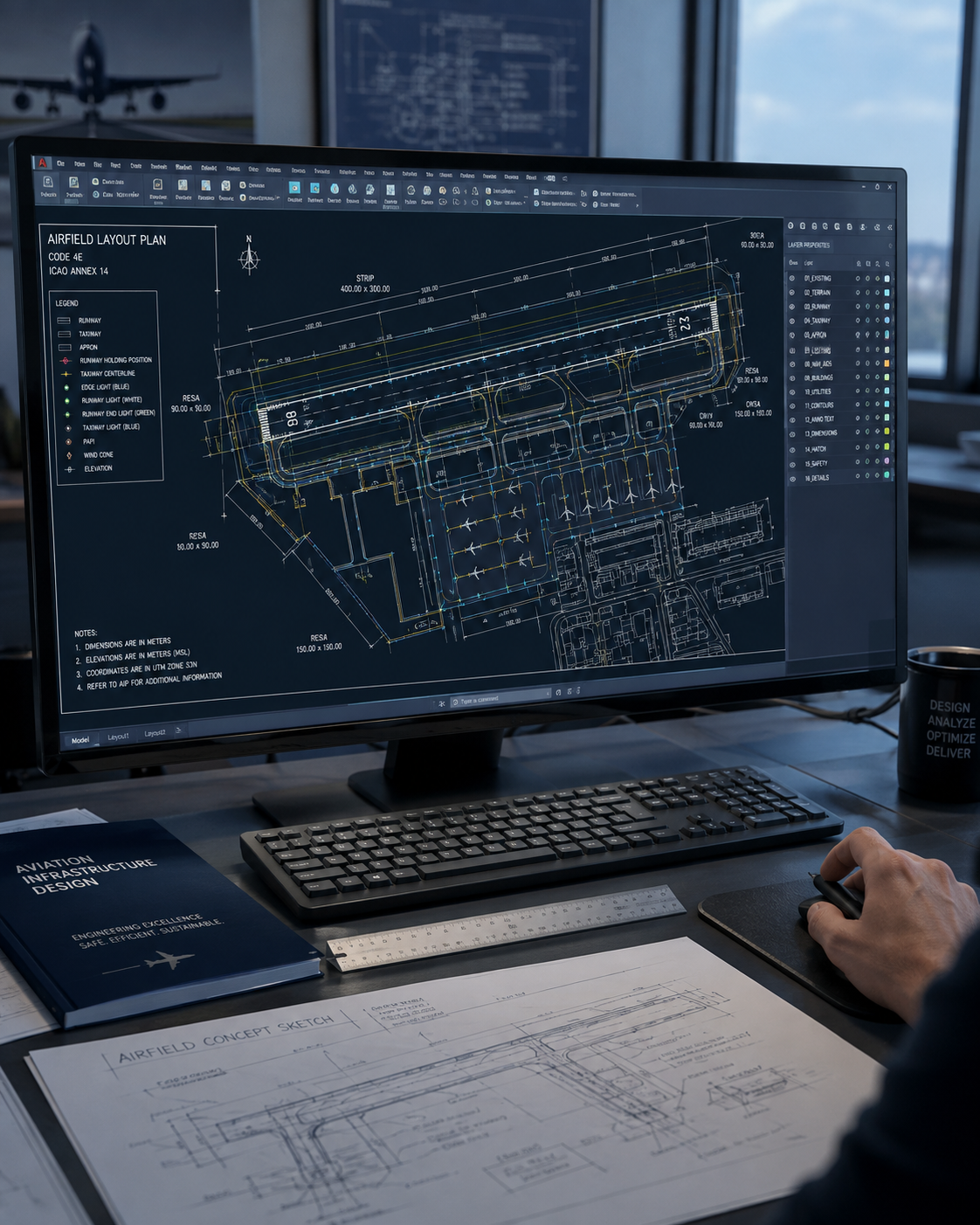
Computer monitor showing aircraft blueprint software, with desk sketches and a hand using a mouse in an office.
By The Compliance Conductor • August 13, 2026
Discover why specialist airfield design expertise is critical to achieving compliance from day one. Insights from Australian Airport Lighting on getting your AGL project right.
An airplane is landing on an illuminated runway.
August 3, 2026
Understand what AGL construction involves at Australian airports — from initial design to compliant installation. Read the full guide from Australian Airport Lighting's expert team.